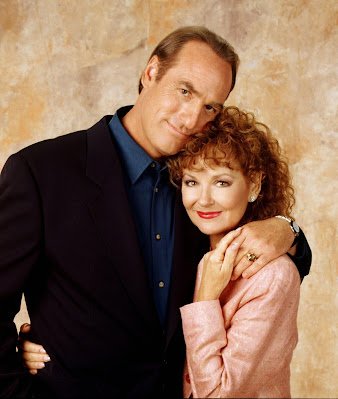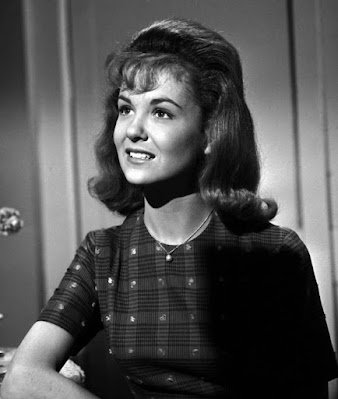
Last week was Shelley Fabares’ birthday; as a gentleman, I won’t say which one. However, I have always enjoyed watching her on TV, and this is the ideal opportunity to express that feeling.
It’s not a response I can readily describe, and I don’t feel the need to break it down and examine it, much as I did when I wrote about Brooke Bundy years ago. I smile at her smile. Her voice is like melody to my ears. And even though the characters she has played on television for over 30 years are the main reason I know her, I am positive that the actual Shelley must be a great and compassionate person.
What makes her a national treasure in my opinion? I’ll count the ways.
In Twilight Zone (1954), she came dangerously close to saving the world.
Although “Black Leather Jackets” isn’t as good as “Living Doll” and “Time Enough At Last,” it’s still funny enough to see at least once. Three young aliens wearing masks and black leather jackets ride into an unidentified town with the intention of poisoning all living things on Earth by contaminating the water supply with lethal bacteria. And if it weren’t for Shelley Fabares’ interference as Ellen, who attracts the attention of an alien, they would have also gotten away with it. They fall in love and lead happy lives, but sadly, everyone perishes when the invaders finish their purpose. However, she made an effort.
“Annette” (1958)
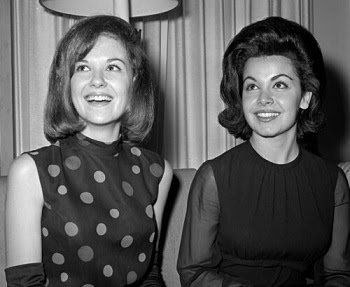
In this blog, I have previously expressed my love for this Mickey Mouse Club serial. Not only does it include Shelley alongside Annette Funicello, Tim Considine, Roberta Shore, and several of the original Mousketeers, but it also stars Mary Wickes, Richard Deacon, and Doris Packer, among other well-known and always welcome characters, making it one of the best examples of what Comfort TV should be, in my opinion. Fabares portrays Moselle Corey, who is a member of the mob of teenagers who gather to welcome newcomer Annette. If anyone knows someone who is genuinely named Moselle, please let me know. Every time I watch it, I also joyfully recall how Annette and Shelley initially connected here and stayed close friends until Annette’s death.
1958’s The Donna Reed Show
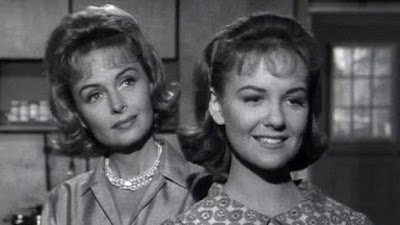
Shelley Fabares played Mary Stone, the Marcia Brady of the 1950s: intelligent, well-liked, attractive, well-mannered, and a touch conceited. She and Donna Reed had one of the most endearing and encouraging mother-daughter relationships on television, and because of how similar they appeared, many people certainly thought they were related. After the fifth season, Fabares quit the show, and it was never the same.
“Johnny Angel” (1962)
Shelley Fabares never wanted to be a singer, especially since she was aware of her lack of talent. But once Ricky Nelson started doing songs on The Adventures of Ozzie & Harriet, every TV show wanted its own. As a result, Shelley and her comedy brother Paul Petersen were also had to record a song. Shelley performed “Johnny Angel” on “Donna’s Prima Donna,” a season four episode of The Donna Reed Show. In March 1962, the song peaked at number one on the Billboard list. How anyone could watch this two-minute clip without falling a little in love is beyond me.
“The New Look” (1963)
One of Mary’s boyfriends used the phrase “wholesome” in an attempt to compliment her in this Donna Reed episode. Mary’s self-doubt and desire to transform her goody-goody image spiral out of control as a result. In the dream sequence that follows, which takes place at the local malt shop, Mary walks in wearing a stunning, form-fitting white dress, twirling a parasol, and having a more elegant hairdo. And for the first time, all the boys who were enamored with her modest grin and button nose saw the Shelley Fabares who would attract Elvis’s attention in just two years. Sweet and seductive have never been combined with greater potency.
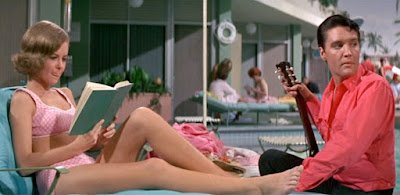
She could make an Elvis movie almost watchable (1965-1967)
With the exception of Viva Las Vegas and a few select moments in King Creole and Jailhouse Rock, the Elvis Presley filmography is hardly more distinguished than that of Pauly Shore. But Shelly Fabares pops up as the love interest in three of the King’s standard B musicals – Girl Happy, Spinout, and Clambake – and now when I stumble across them on TCM I usually stick around for a while.
The Song of Brian (1971)
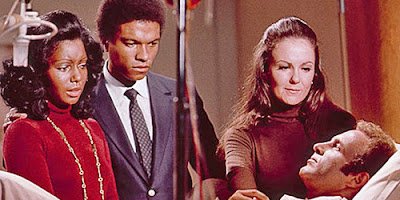
The friendship between Chicago Bears athletes Gale Sayers (Billy Dee Williams) and Brian Piccolo (James Caan) was the subject of one of the most well-known and cherished made-for-TV films. Joy, Piccolo’s wife, is portrayed by Shelly Fabares. Although it’s a minor part, notice the parts where Joy listens intently to Brian while he tells stories over dinner or how you can sense her feelings when Brian tries to play next season despite his fatal diagnosis. These are brief yet unforgettable moments.
A Day at a Time (1978)
Over the course of more than 30 episodes over five seasons, Fabares’s office rivalry with Ann Romano as Francine Webster took place. Granted, they are not as well remembered as they need to be because the majority of these occurred after the show had moved past its “single mom raising two daughters” premise. However, it was entertaining to see Shelley portray a cruel character for once; who knew she possessed that quality?
Manor Highcliffe (1979)
Whether or not they truly watched this brief parody of horror clichés and soap operas is always a good method to distinguish true Shelley Fabares fans from casual admirers. Watching a game with a skilled cast trying to make something out of mediocre material can be entertaining if you’re in the correct frame of mind.
Coach (1989)
He had more to do with the people in his immediate vicinity than he did as college football coach Hayden Fox. After declining the starring part in Gilligan’s Island for My Mother the Car, second banana Jerry Van Dike deserved some positive TV karma. Fabares’s relationship with Nelson’s coach as news anchor Christine Armstrong embodied all the stereotypes of a sophisticated woman dating a jerk, but there was chemistry that worked. More significantly, it put Shelley in a class by herself; how many TV celebrities can claim iconic parts from the 1950s, 1960s, 1970s, 1980s, and 1990s? You become a national treasure in this way.